
Advisory · Technology · Commercial · Research
Advance with AI.
Stay in command.
AI can take on more of the work. Your organization still has to decide what it is allowed to do—and answer for what follows.
We advise on those decisions and develop the technology to carry them into day-to-day operations.
AI governance, from policy to practice.
For people responsible for the decisions AI helps make.
Our work
Where we can help
You may be weighing a first use of AI, preparing an evaluation, or pursuing a research question. The starting point is the work you have in mind.
Advisory
Decisions about AI adoption
Consulting, speaking, and education for organizations deciding where AI belongs, who should oversee it, and what needs to change.
02Technology
Controls at the point of action
Explore the platform we are developing to carry an organization’s permissions through to execution and a checkable result.
03Commercial
Pilots, licensing, and partnerships
Discuss a proposed use, the work needed to evaluate it, and the responsibilities of bringing it into operation.
04Research
The questions behind the system
Examine our research agenda on delegated authority, system behavior, and the conditions for meaningful human oversight.
Based in Tampa Bay, Florida.
About AetheriaOur approach
Delegation should
keep its limits.
Giving an AI system a task leaves it with choices: which records to use, what to recommend, perhaps whom to contact. Those choices can exceed what the person assigning the work intended.
We focus on keeping the original authority intact as a request becomes a specific action. That starts with the organization’s own decisions about access, discretion, and responsibility.
Some work can proceed under a standing mandate. Other decisions need a person’s judgment. The controls should reflect that difference.
Work through an AI use case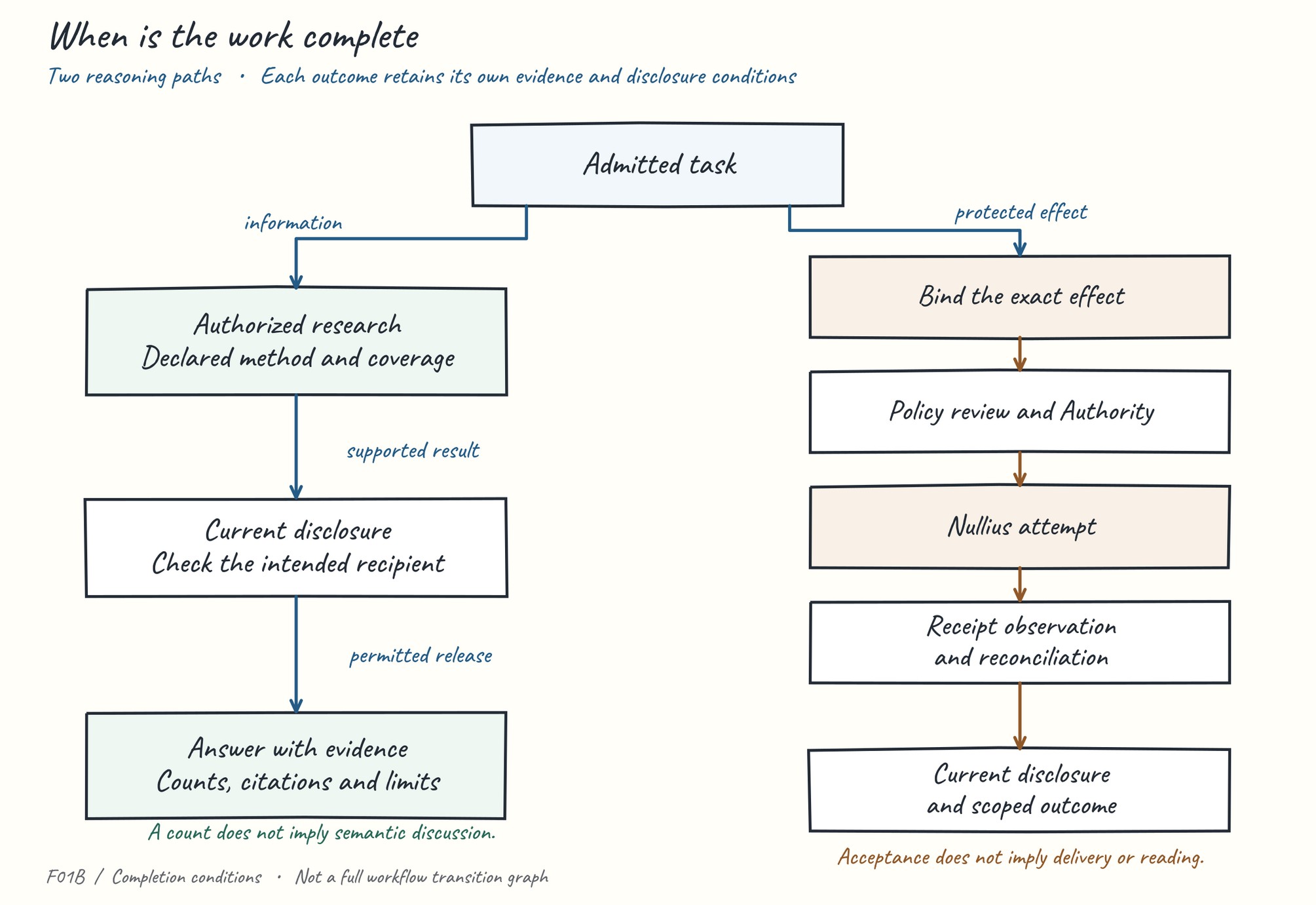
A municipal example
Fifteen years of records.
One question from a clerk.
A clerk wants to know how the council has handled a recurring issue. An AI assistant could help trace the discussion across years of minutes, provided the clerk can check the sources and understand where the record is incomplete.
The next request may seem small: mark a record as reviewed. But that changes stored information. It needs permission of its own, tied to the record the clerk actually examined.
See the proposed evaluationWhat would the clerk need to check?
- Research
The records behind the answer
Search follows the clerk’s permissions. Citations let the clerk return to the source; coverage limits explain what the answer can support.
- Review
The proposed change
An internal marker changes from unreviewed to reviewed. The authoritative minutes are left untouched.
- Confirmation
What was actually recorded
The change is authorized for the expected record version. A separate readback checks the result; missing confirmation leaves it unresolved.
Proposed evaluation scenario. This example describes no deployed customer system.
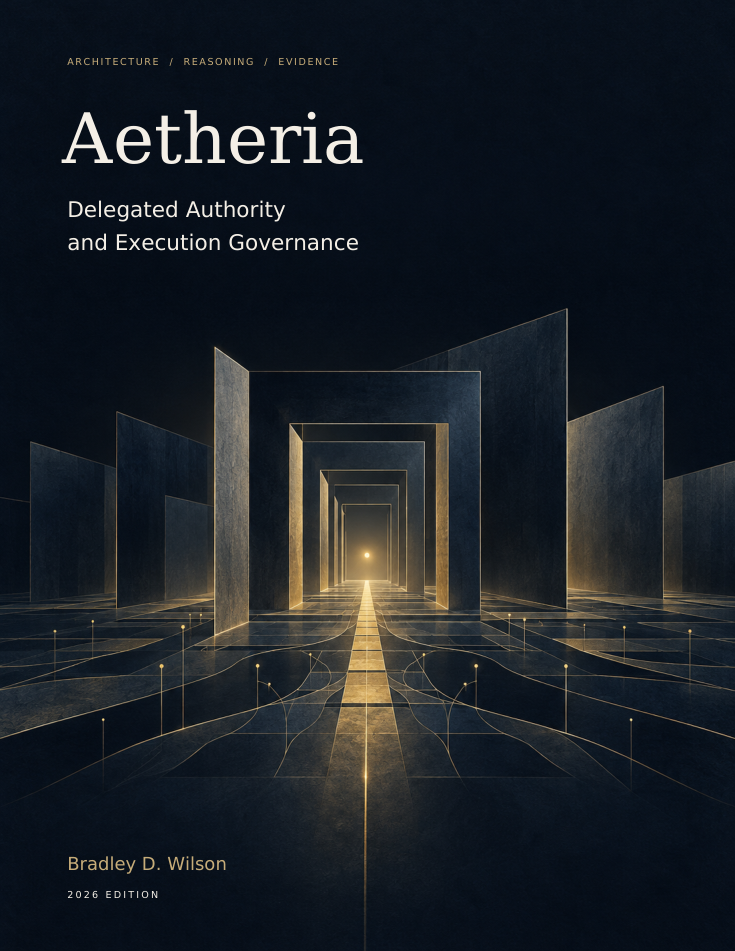
2026 textbook manuscript
Research and education
Authority is also
a question about people.
A system can check whether a rule was followed. Whether that rule gives the right person the right discretion is a further question.
Our research agenda examines both: how delegation can be represented in software, and what makes it justified and open to challenge. The textbook develops these questions through cases, diagrams, and exercises.
Explore the research agendaWorking manuscripts and proposed studies; university collaborators welcome.